With the growing global demand for gasoline, diesel, and other light petroleum products, oil refineries must maximize the value obtained from every barrel of crude oil. Since a significant portion of crude oil consists of heavy hydrocarbons, a process known as cracking was developed to convert these heavy molecules into lighter, more valuable products. Today, cracking is considered one of the most important processes in the oil refining industry and is utilized in nearly all modern refineries.
What Is the Cracking Process?
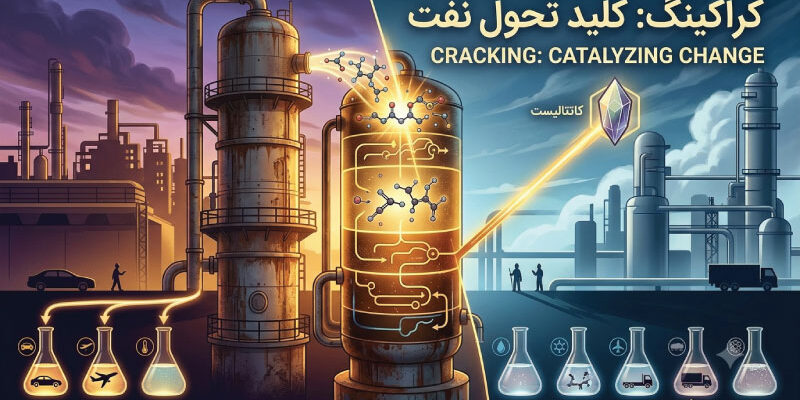
Cracking is a process in which large, heavy hydrocarbon molecules are broken down into smaller molecules. This process is carried out by applying temperature, pressure, or using a catalyst, and its main goal is to increase the production of light products such as gasoline, liquefied petroleum gas (LPG), diesel, and feedstocks for the petrochemical industry.
Why Is the Cracking Process Important?
If the cracking process is not carried out, a large portion of crude oil will be converted into heavy products such as fuel oil, which have lower economic value than gasoline or jet fuel. Therefore, refineries use cracking units to
- Increase the production of gasoline and diesel fuel.
- Increase the added value of each barrel of crude oil.
- Provide the necessary feedstocks for the petrochemical industries.
- Reduce the production of heavy petroleum products.
- Increase refinery efficiency.
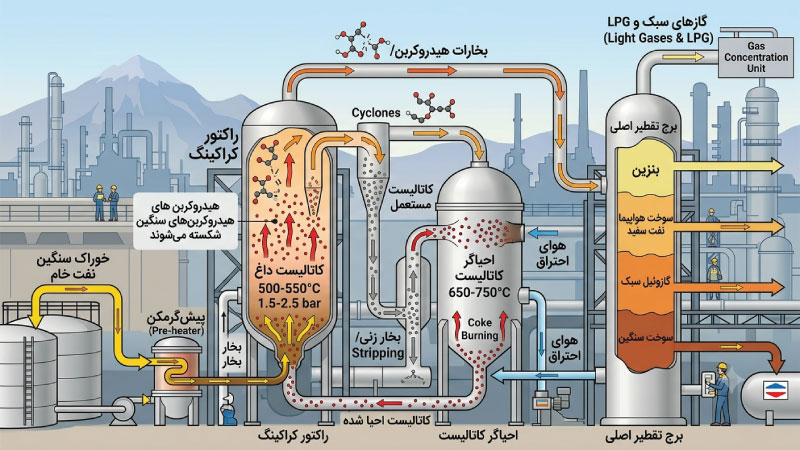
Types of Cracking Processes
- (Thermal Cracking)
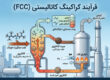
- (Catalytic Cracking)
- (Hydrocracking)
(Thermal Cracking)
Thermal cracking is the oldest method of breaking down hydrocarbon molecules. In this method, the oil feed is subjected to very high temperatures and appropriate pressure to break the bonds between carbon atoms. Among the features of this method are the following:
- No use of catalysts.
- High operating temperatures.
- High energy consumption.
- Lower product quality compared to modern methods.
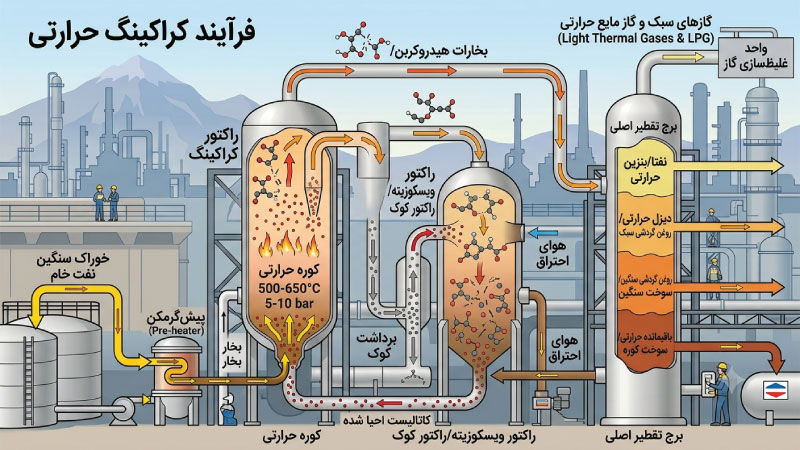
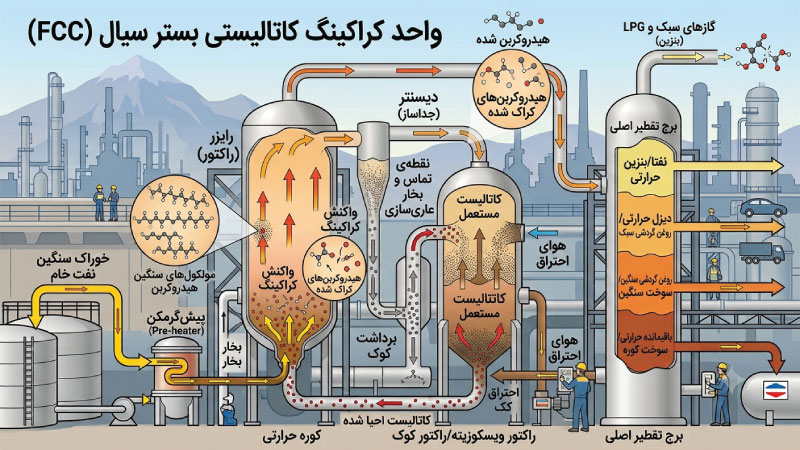
(Catalytic Cracking)
Catalytic cracking is the most advanced and common method in modern refineries. This process uses catalysts such as zeolite, which increase the reaction rate and produce gasoline with a higher octane number. Among the features of this method are the following:
- Higher efficiency.
- Lower energy consumption.
- Better product quality.
- Higher gasoline production.
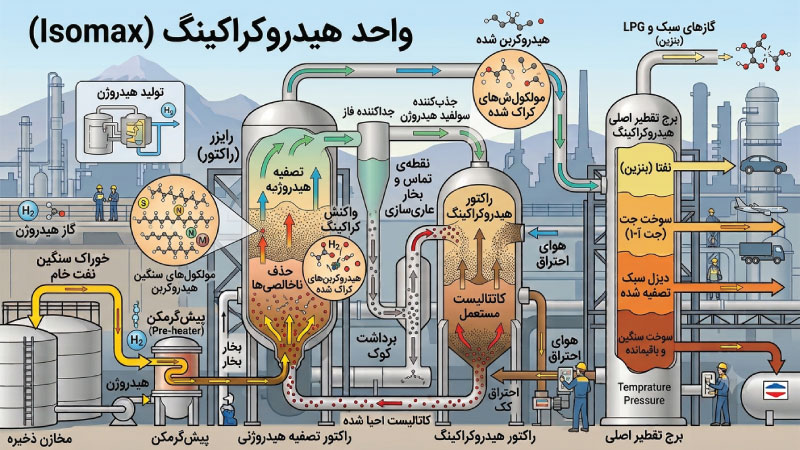
(Hydrocracking)
Hydrocracking is one of the most advanced oil refining processes that uses hydrogen gas in addition to a catalyst. The presence of hydrogen removes sulfur, nitrogen, and other impurities, producing very high-quality fuels. The uses of this method include the following:
- Low-sulfur diesel fuel.
- Jet fuel.
- Kerosene.
- Base oils.
Products Obtained from the Cracking Process
The cracking process is not only used for gasoline production but also generates several valuable products, including:
- Gasoline and diesel fuel.
- Liquefied petroleum gas (LPG) and diesel fuel.
- Kerosene and petrochemical feedstocks.
- Propylene, ethylene, and butene.
Advantages and Challenges of the Cracking Process.
Using the cracking process increases the profitability of refineries and the optimal use of crude oil, but implementing this process also comes with challenges.
Advantages
- Increase the production of light petroleum products.
- Reduction in fuel oil production.
- Increase the added value of crude oil.
- Provide raw materials for the petrochemical industries.
- Improve refinery efficiency.
Challenges
- High energy consumption in some methods.
- Catalyst deactivation due to the formation of coke.
- High equipment costs.
- Need for precise control of operating conditions.
Conclusion
The cracking process is one of the most important technologies in the petroleum refining industry. By breaking down heavy hydrocarbon molecules, it enables the production of valuable light products such as gasoline, diesel fuel, and petrochemical feedstocks. Today, processes such as catalytic cracking and hydrocracking have a significant role in modern refineries due to their high efficiency, better product quality, and greater compatibility with environmental standards. With the increasing global demand for clean fuels and petrochemical products, the cracking process will continue to remain one of the key components of the oil and gas industry.