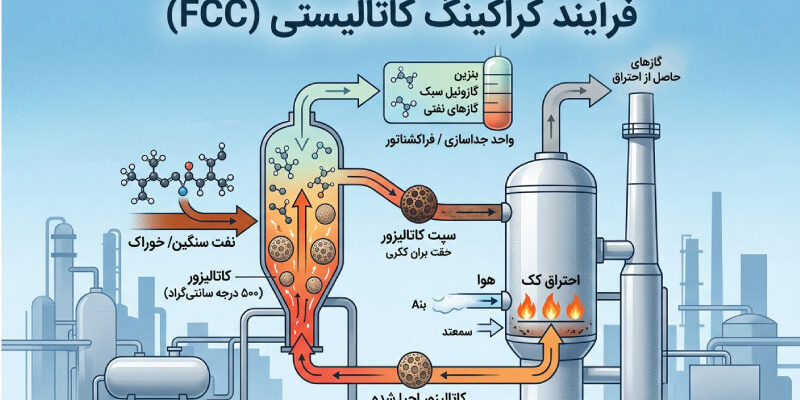
Catalytic cracking is one of the most important conversion processes in oil refineries, used to convert heavy hydrocarbons into lighter compounds with higher economic value. In this process, large hydrocarbon molecules are broken down into smaller molecules in the presence of a catalyst.
The main purpose of catalytic cracking is to increase the production of light products such as gasoline, light gases, and certain feedstocks used in the petrochemical industry. Compared with thermal cracking, this process provides better control over reactions and enables the production of higher-value products.
One of the best-known technologies used in this field is Fluid Catalytic Cracking (FCC), which is widely used in refineries to convert heavy feedstocks into lighter products.
Why Is Catalytic Cracking Important in Oil Refineries?
After crude oil enters the refinery, it is separated into different fractions. Some of these fractions are heavier, and their economic value is lower compared with lighter products such as gasoline.
This is where the catalytic cracking process becomes important. Refineries can use this process to convert part of the heavy fractions into lighter products.
The main objectives of using catalytic cracking include:
-
Increasing Gasoline Production
-
Converting Heavy Hydrocarbons into Lighter Products
-
Production of Light Gases and Olefins
-
Increasing the Economic Value of Refinery Feedstock
-
Supplying Feedstocks for the Petrochemical Industry
-
Reducing the Share of Certain Heavy Products
How Does the Catalytic Cracking Process Work?
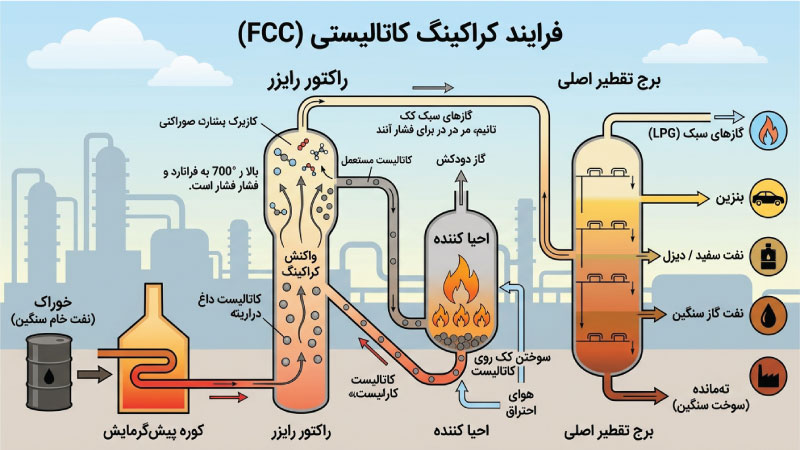
In catalytic cracking, the heavy feedstock enters the reaction unit and comes into contact with hot catalyst particles. The catalyst promotes the breakdown of hydrocarbon molecules, allowing the reactions to occur more rapidly and along more favorable pathways.
After the reaction takes place, the products are separated from the catalyst and transferred to the downstream sections of the unit for further separation and processing.
One of the key features of this process is the continuous circulation of the catalyst. During the reaction, the catalyst loses part of its activity due to the formation of coke. Therefore, the catalyst is transferred to the regenerator, where the coke deposited on its surface is burned off, largely restoring its activity.
The regenerated catalyst is then returned to the reaction section. This continuous cycle is one of the key features of FCC technology.
The Role of Catalysts in Catalytic Cracking
As the name Catalytic Cracking suggests, the catalyst is one of the most important components of this process.
The catalyst enables hydrocarbon conversion reactions to occur under more favorable conditions and allows better control over product distribution. In many modern FCC units, zeolite-based catalysts are used.
The choice of catalyst can affect the production of different products, unit activity, and the overall performance of the process. Therefore, the design and selection of a suitable catalyst are important considerations in the operation of catalytic cracking units.
What Is an FCC Unit?
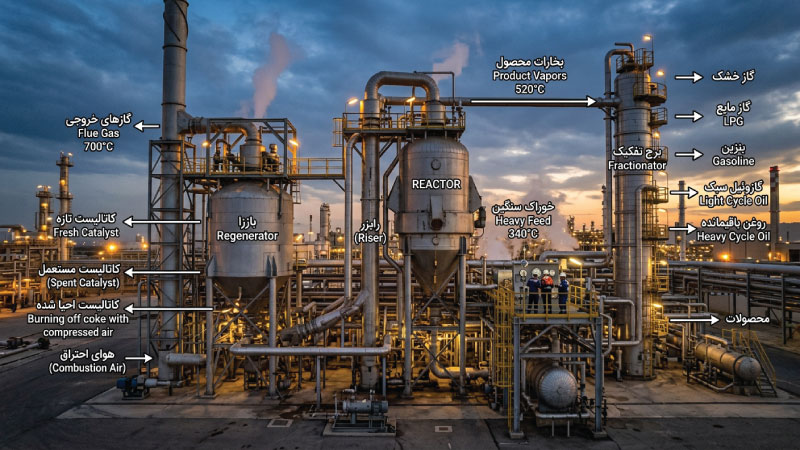
FCC (Fluid Catalytic Cracking) is one of the most widely used catalytic cracking technologies. In this process, fine catalyst particles are circulated within a fluidized stream, which is why the term “fluidized bed” is used.
An FCC unit typically includes sections for reaction, product separation, and catalyst regeneration. The feedstock enters the reaction section, and after coming into contact with the catalyst, the resulting products are separated from the system.
The catalyst is also separated and sent to the regeneration section, where it is prepared for reuse.
This design enables the continuous circulation of the catalyst and uninterrupted operation of the process, making FCC units an important technology in petroleum refining.
Benefits of Catalytic Cracking
Catalytic cracking offers various benefits for oil refineries. Its main advantage is the ability to convert part of the heavy hydrocarbons into lighter products.
The main benefits of this process include:
- Increase the production of light petroleum products.
-
Increasing the Economic Value of Heavy Feedstock
-
Production of Gasoline and LPG
-
Production of Valuable Olefins
-
More Efficient Utilization of Crude Oil
-
Greater Refinery Flexibility in Producing Different Products
Difference Between Catalytic Cracking and Thermal Cracking
Both processes are used to break down heavy hydrocarbon molecules, but their main difference lies in how the reactions are carried out.
In thermal cracking, molecules are primarily broken down through high temperatures and suitable operating conditions, whereas catalytic cracking uses a catalyst to facilitate and guide the reactions.
The presence of a catalyst in catalytic cracking allows for better control of the reactions and enables the production of a different product distribution.
Applications of Catalytic Cracking in the Oil and Petrochemical Industries
Catalytic cracking is important not only for increasing the production of light fuels but also for supplying feedstocks required by the petrochemical industry.
Some FCC products, such as propylene and other olefins, can be used as feedstocks for the production of various petrochemical products. Therefore, a catalytic cracking unit can help create a link between the refining and petrochemical industries.
With the growing demand for fuels and petrochemical feedstocks, optimizing these units can play an important role in improving refinery efficiency.
Conclusion
Catalytic cracking is one of the most important petroleum refining processes, using a catalyst to convert heavy hydrocarbons into lighter and more valuable products.
FCC (Fluid Catalytic Cracking), or fluidized catalytic cracking, is one of the most widely used technologies in this process. Through the continuous circulation of the catalyst, it enables the continuous conversion of heavy feedstocks.
The production of gasoline, LPG, propylene, and other light products, along with increasing the economic value of feedstocks and supplying certain raw materials for the petrochemical industry, are among the key benefits of this process. Given the importance of efficient crude oil utilization and the growing demand for light petroleum products and petrochemical products, catalytic cracking will continue to play an important role in the petroleum refining industry.