
Penetration grade bitumen is one of the most widely used types of refinery bitumen, classified according to its hardness and softness. This type of bitumen is produced through the crude oil refining process and, due to its good adhesion, water resistance, and excellent performance in road construction, asphalt paving, and certain civil engineering applications, is considered an important product in the bitumen industry.
The main characteristic of penetration grade bitumen is that its hardness or softness is determined using the penetration test. As a result, various grades of this bitumen are available, each of which can be used for different climatic conditions and projects.
How Is Penetration Grade Bitumen Produced?
Bitumen is one of the heavy products obtained from the crude oil refining process. After various separation and refining processes, heavy oil fractions can be used as feedstock for bitumen production.
In the production of penetration grade bitumen, the properties of the final product depend on the production process conditions and the characteristics of the feedstock. By controlling the properties of the bitumen, products with different degrees of hardness and softness can be produced, making them suitable for various applications in the road construction and building industries.
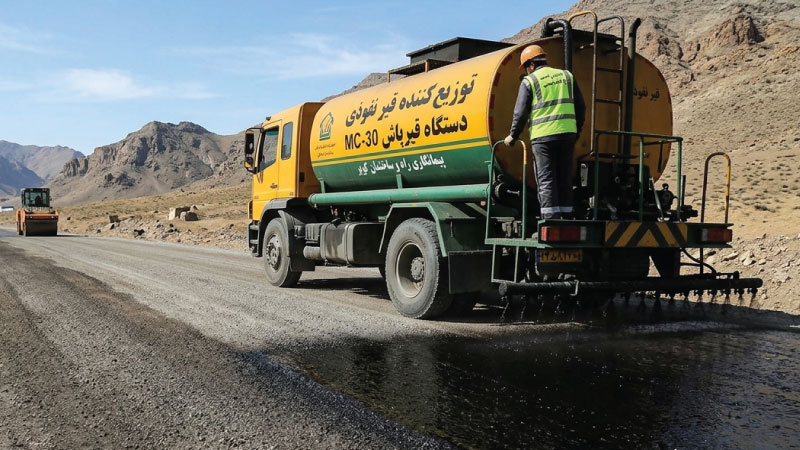
When is penetration-grade bitumen used?
The selection of penetration grade bitumen depends on various factors, such as the type of project, climatic conditions, ambient temperature, and traffic load. Therefore, no single grade can be considered suitable for all projects.
Road construction and maintenance
One of the main applications of penetration grade bitumen is its use in the production of hot-mix asphalt for road construction and maintenance. Highways, urban streets, intercity roads, and many transportation routes are among the projects where bitumen is used in asphalt mixtures.
Construction projects.
In addition to road construction, penetration grade bitumen is also used in certain civil engineering projects. In projects that require bituminous coatings or protective layers, an appropriate bitumen grade can be selected based on the technical specifications of the project.
Areas with different climatic conditions.
Climatic conditions are one of the important factors in selecting penetration grade bitumen. In hot, cold, or moderate regions, the behavior of bitumen and the performance of the pavement can vary.
Therefore, the selection of the bitumen grade should be based on the climatic conditions of the region and the technical specifications of the project. An incorrect selection can negatively affect the performance and durability of the pavement.
Heavy traffic projects.
On routes with high traffic volume and heavy traffic loads, selecting the appropriate bitumen becomes even more important. In such projects, the technical specifications of the bitumen and asphalt are usually evaluated more carefully to enhance the pavement’s resistance to deformation and loading.
Characteristics of penetration-grade bitumen.
- Good adhesion to aggregate materials.
- Good resistance to water penetration.
- Suitable flexibility under various weather conditions.
- Acceptable durability and service life in road pavements.
- Ability to be used in the production of various types of hot asphalt mixtures.
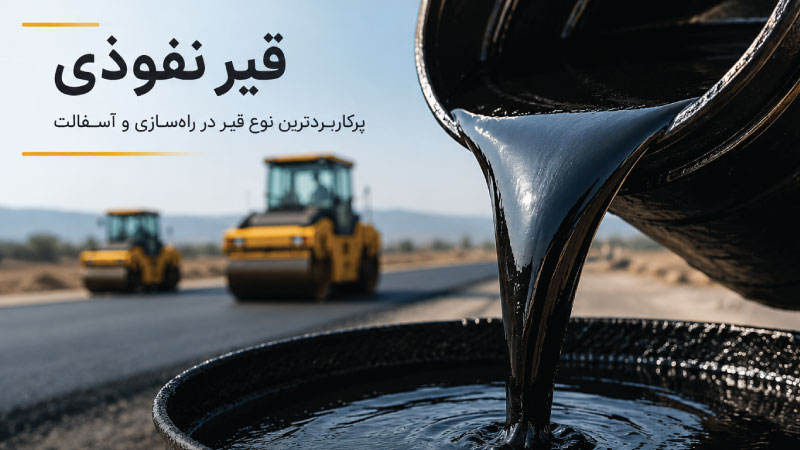
When is penetration-grade bitumen used?
- Road construction and maintenance.
- Construction projects.
- Areas with different climatic conditions.
- Heavy traffic projects.
Difference between penetration-grade bitumen and viscosity-grade bitumen.
Penetration grade bitumen and viscosity grade bitumen are both used in the road construction industry, but their grading methods are different.
For penetration grade bitumen, the hardness or softness of the product is determined based on the penetration depth of a standard needle. In contrast, viscosity grade bitumen is classified according to its resistance to flow at specified temperatures.
In various projects, the choice between these grading methods depends on the standard being used, the project specifications, and the expected performance conditions. In addition, today Performance Grade (PG) bitumen is also used in some advanced projects, allowing the performance of bitumen to be evaluated under specific temperature and loading conditions.
Advantages of Using Penetration Grade Bitumen
The widespread use of penetration grade bitumen in the road construction industry is due to its various advantages. Good adhesion to aggregates, water resistance, suitability for hot-mix asphalt production, and the availability of different grades are among the key advantages of this type of bitumen.
Furthermore, the availability of bitumen with different hardness grades makes it possible to select a product that is suitable for the specific project conditions.
Conclusion
Penetration grade bitumen is one of the most important and widely used types of bitumen in the road construction industry, classified according to its hardness or softness. Proper selection of the bitumen grade based on climatic conditions, project type, and traffic volume has a direct impact on the quality, durability, and performance of the pavement. Therefore, understanding the characteristics and applications of penetration grade bitumen is of great importance to contractors, consultants, and professionals in the road construction industry.