Crude oil storage tanks are an important part of the energy supply chain, responsible for safely storing crude oil before it is transferred to refineries, export terminals, or other segments of the oil supply chain. Increasing production capacity and the expansion of energy trade have led to the integration of new technologies into the design and construction of these tanks. Today, safety, durability, corrosion control, emission reduction, and continuous equipment monitoring are among the most important criteria in the design of modern storage tanks.
.
Modern construction methods for crude oil storage tanks aim not only to increase capacity and service life but also to reduce maintenance costs and operational risks. The use of engineered steels, protective coatings, floating roofs, smart monitoring systems, and modern construction methods represents part of this transformation in the oil industry.
.
The Importance of Designing and Constructing Crude Oil Storage Tanks
Proper tank design plays an important role in its safety and long-term performance. The type of crude oil, required capacity, climatic conditions, installation location, and safety requirements should be assessed before selecting equipment and materials. Factors such as corrosion, temperature variations, pressure, ground settlement, and the potential for leakage should also be considered during the design process.
.
Selecting the appropriate tank structure can help prevent technical and environmental damage. Therefore, new projects are generally designed and executed based on engineering standards and safety requirements in the oil industry.
.
The Use of Advanced and High-Strength Steels
One of the most important modern methods in tank construction is the use of high-strength steels and materials suitable for operating conditions. Engineered steels can increase structural strength and, in some designs, enable a reduction in the thickness or weight of certain structural components.
.
Material selection should also be based on the type of fluid, environmental conditions, and the potential for corrosion. Using suitable steel together with corrosion control systems can extend the service life of the tank and reduce the need for premature repairs.
.
Anti-Corrosion Coatings and Protective Systems
Corrosion is one of the major causes of damage to oil storage equipment. Exposure of the tank’s internal or external surfaces to moisture, chemical compounds, and environmental conditions can gradually reduce the structural strength.
.
For this reason, the use of protective coatings such as epoxy systems and other engineered coatings can play an important role in protecting metal surfaces. The coating should be selected based on operating conditions and environmental characteristics. Proper application is just as important as material selection, as inadequate surface preparation or improper coating application can reduce its effectiveness. .
Floating Roof Technology for Reducing Evaporation
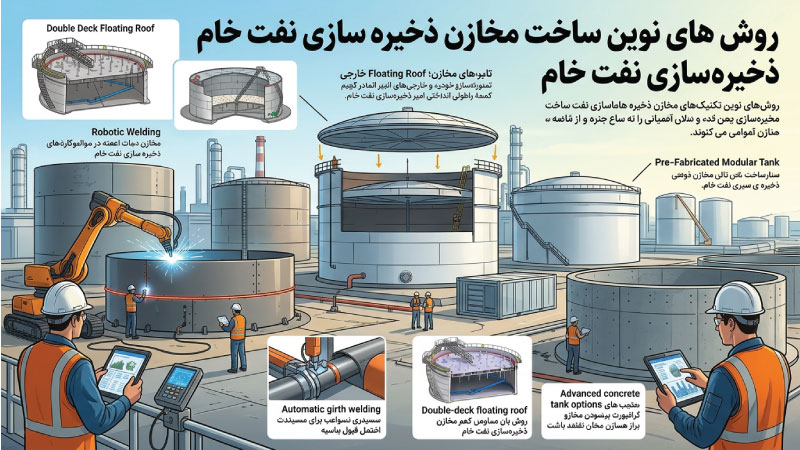
In many crude oil storage tanks, the use of a floating roof is
is one of the effective methods for controlling hydrocarbon vapor emissions. The floating roof moves with the liquid level and reduces the vapor space above the fluid.
.
This design can help reduce vapor emissions and product losses. The use of appropriate sealing systems around the floating roof is also highly important. Proper design, inspection, and maintenance of these systems can enhance the tank’s safe and effective performance.
.
Double-Wall Storage Tanks and Safety Enhancement Solutions
In projects where leak risk control is particularly important, the use of multilayer or double-wall designs can help enhance protection. In some applications, the presence of a second protective layer can reduce the risk of oil reaching the surrounding environment if a failure occurs in the primary tank.
.
However, the choice of tank structure should be based on capacity, product type, project location, ground conditions, and regulatory requirements. Proper engineering design should evaluate all of these factors together.
.
Smart Monitoring and the Internet of Things in Storage Tanks
Digital technology has also become an important part of crude oil storage tank management. Installing sensors to monitor level, temperature, and other operational parameters can transmit the required data to the control system.
.
The collected data enables real-time monitoring of the tank’s condition. If abnormal changes are detected, the operations team can respond more quickly. In addition, analyzing data over time helps identify failure trends and plan preventive maintenance.
.
Conclusion
Crude Oil Storage Tanks
With the use of new technologies, they are being built and managed to be safer, more durable, and smarter than ever before. The use of high-strength steels, anti-corrosion coatings, floating roofs, safe designs, digital monitoring systems, and modern construction methods can improve the performance of this equipment.
.
Ultimately, the success of a storage project is not limited to tank construction alone; engineering design, material selection, quality control, inspection, and maintenance also play important roles in its long-term performance. Investing in these technologies can reduce operational and environmental risks while also improving the efficiency of the oil supply chain. For information about petroleum products and cooperation opportunities, you can submit a request. Send your LOI to the sales department of Naft Meraj.